 |
|
 |
|
|
|
|
|
|
Impeller: A310
|

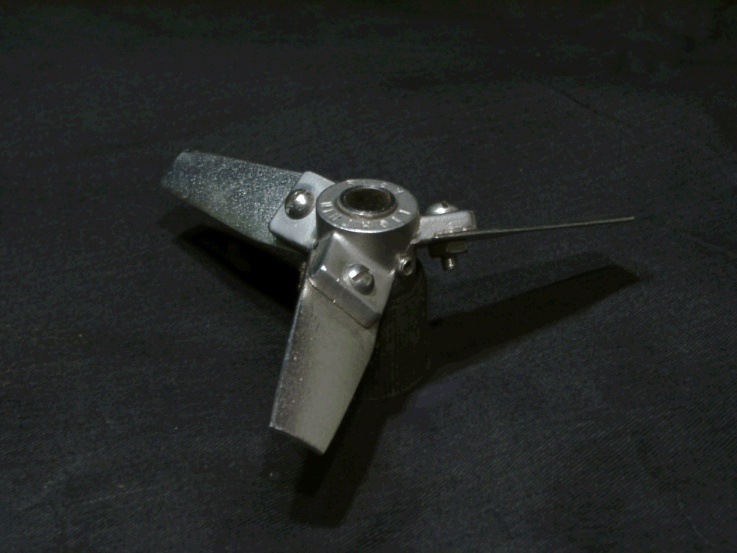
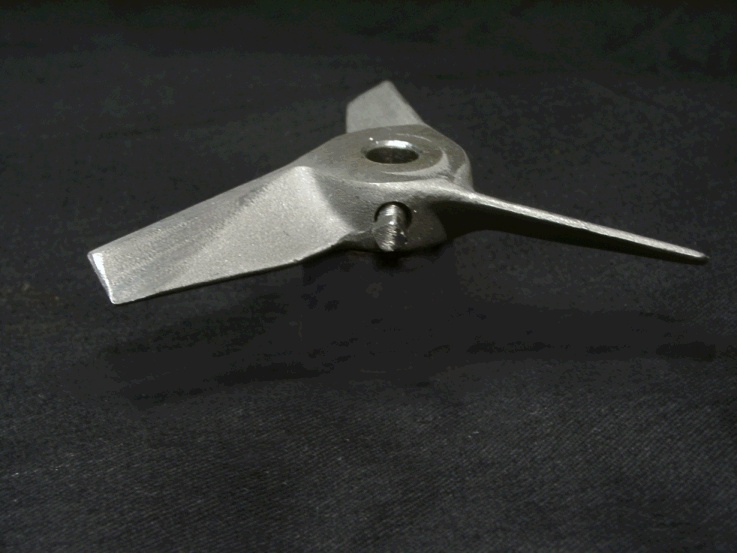
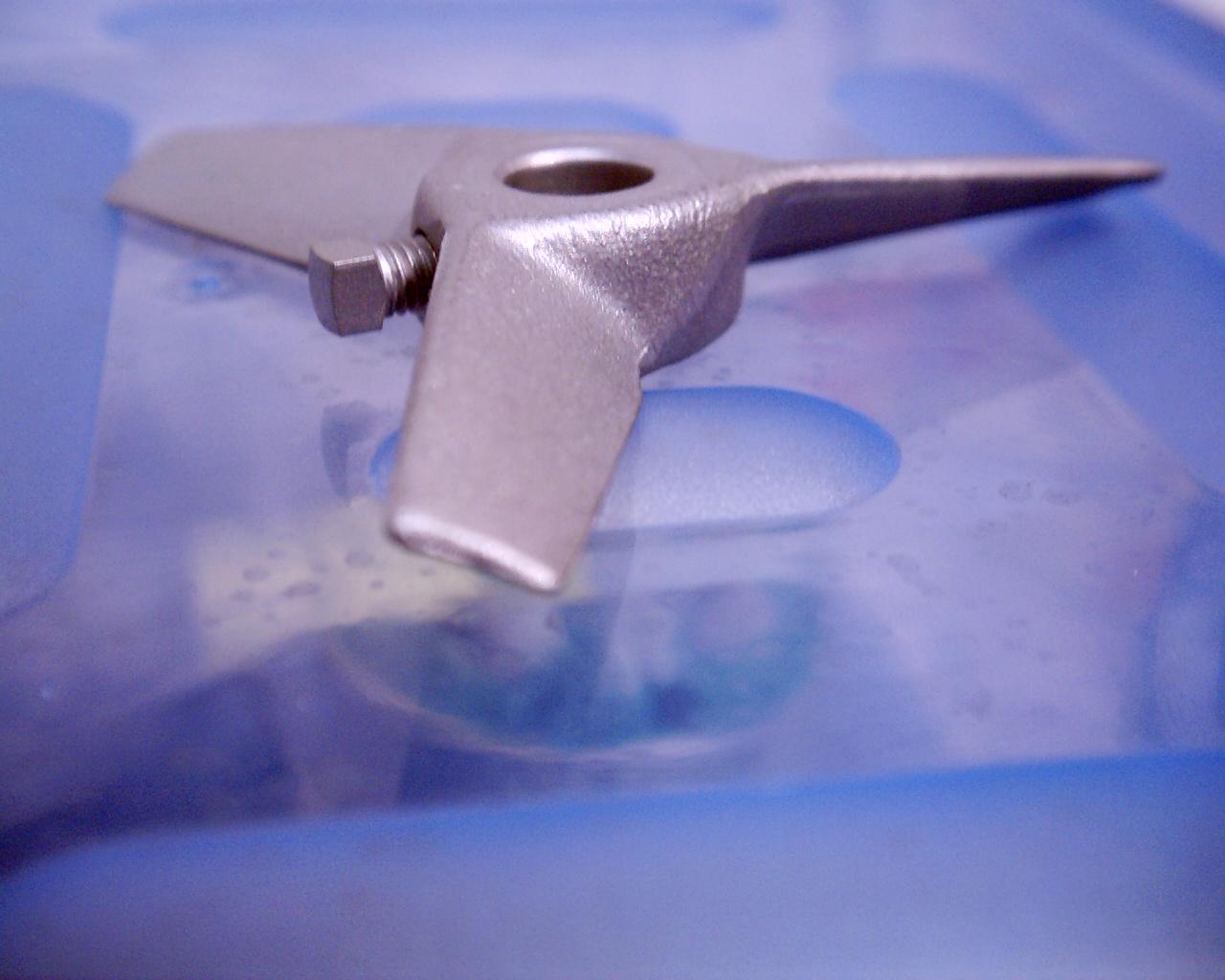
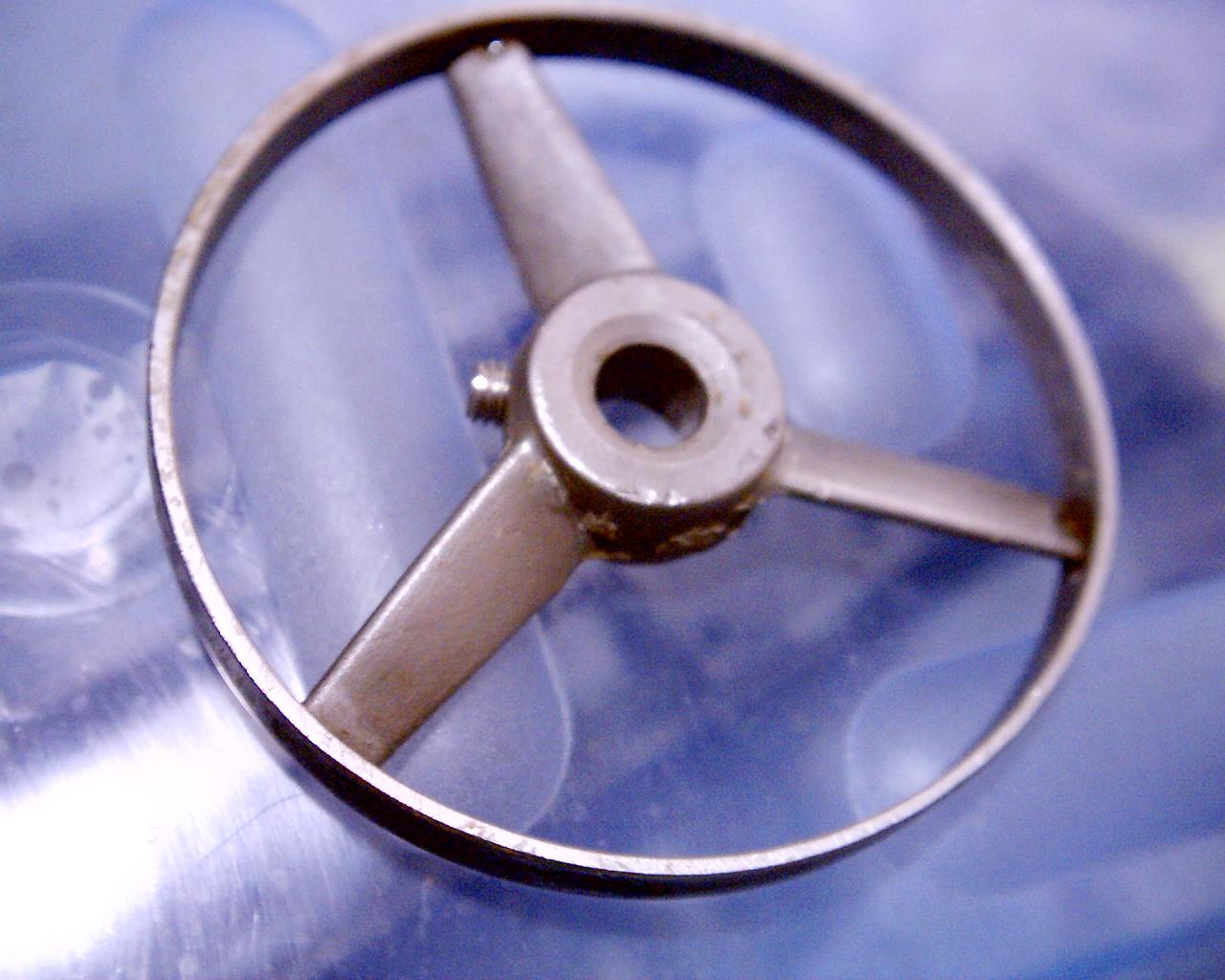
Impellers courtesy of K. McDermott 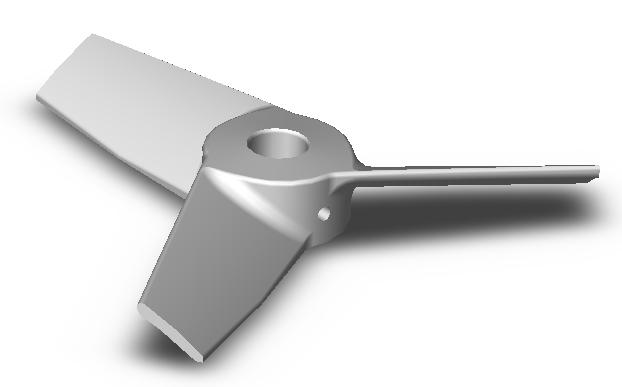
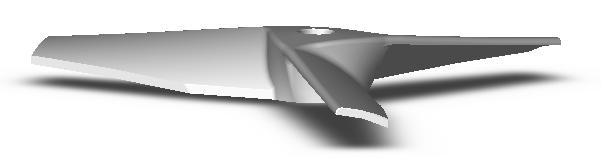
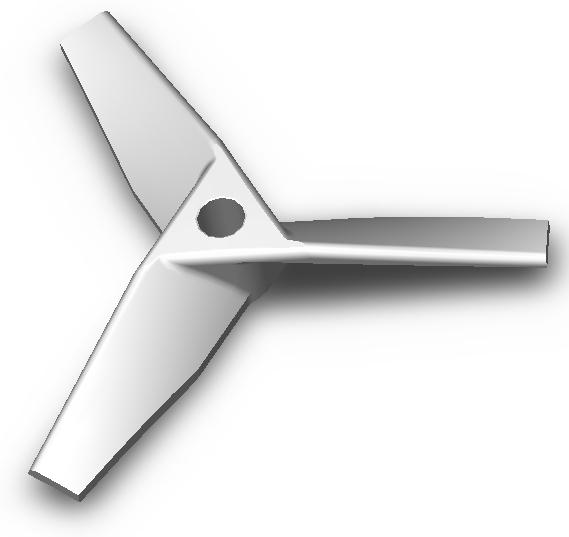
Impellers courtesy of P. Csiszar |
|
The A310 or A-310 is a patented impeller by LIGHTNIN. It has 3 blades and is called by LIGHTNIN a high-efficiency fluidfoil impeller. It is considered an axial flow impeller, because under turbulent conditions the discharge of the fluid is parallel to the shaft (0 degrees). It was commercially introduced in 1983. Turbulent Power Number Np=0.30, Flow Number Nq=0.56 Small and lab-scale A310s are made from castings. Thus, there are specific set sizes. Larger impellers are formed, pressed and bent into shape. The A310 has a rounded leading edge to further improve the flow efficiency. Some large scale A310s do not have the leading edge rounded (to save on cost) and have a flat leading edge. LIGHTNIN calls this the A305 impeller. The A310 was LIGHTNIN's major thrust into fluidfoil or hydrofoil shaped impellers. The A210 preceded it, but after meticulous studying in their Laser Lab, the A310 put an end to the A210. The LIGHTNIN A310 is designed for turbulent flow and shines in flow-controlled processes, such as, fluid flow, liquid-solid mixing, miscible liquids, and blending. The ring shown on one of the pictures is often added to the impeller if it is the lowest impeller, or to stabilize it if the impeller operates during draw-off (emptying the tank while the impeller is still rotating). A310 has been replaced recently (1999) with the A510 impeller. The differences are not noticeable to most of us. The method of manufacture was simplified, creating minor changes, hence the new name A510. Another feature of the A510 is that it comes standard in three tip chord angles (TCA) to accommodate process and engineering design constraints. When we find out what they are, we will let you know here. |
|
|