 |
|
 |
|
|
|
|
|
|
Propeller, Propellor, or PR |

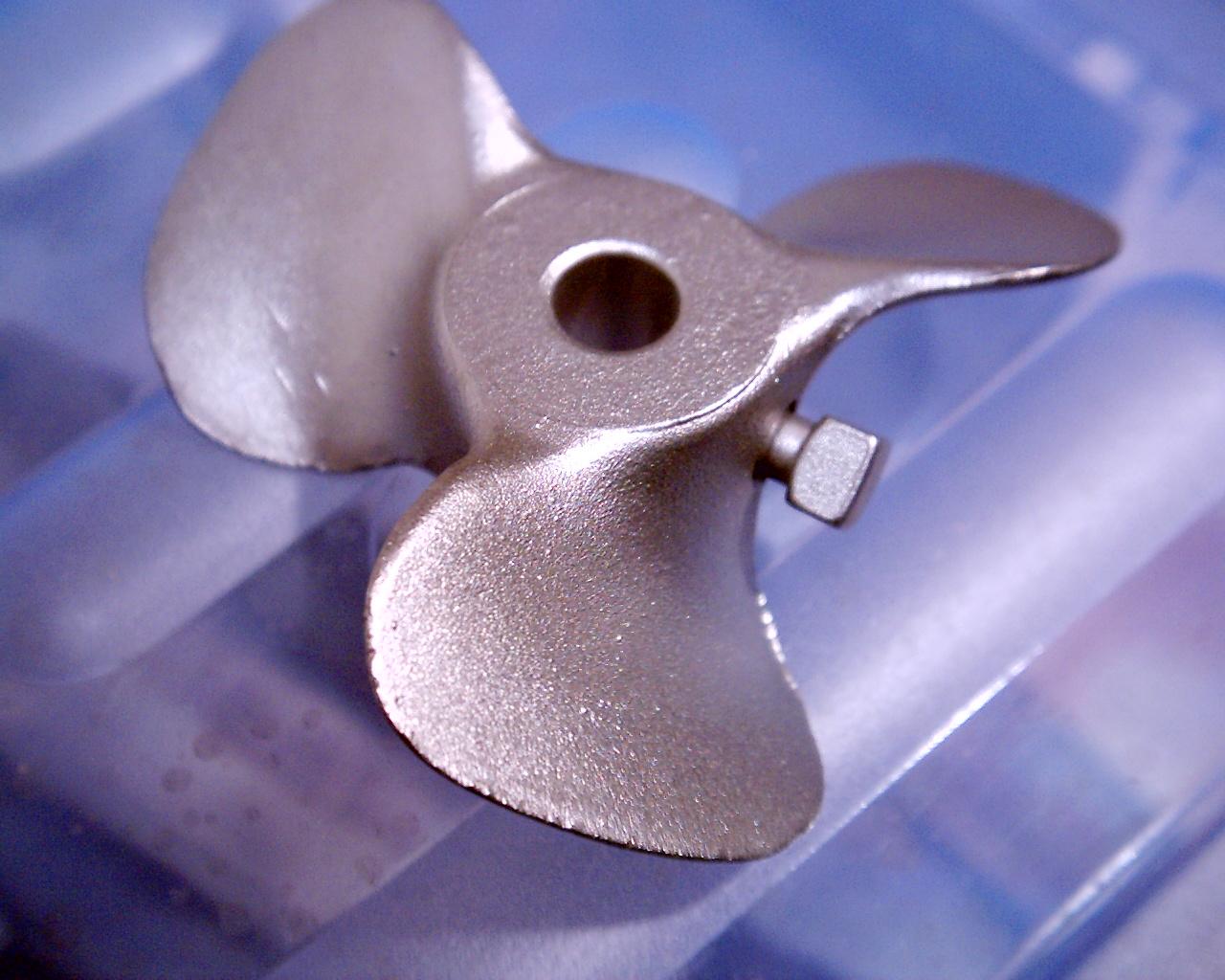
Impellers courtesy of K. McDermott 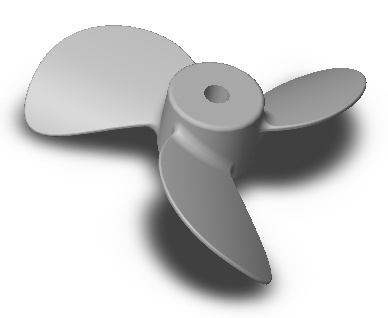
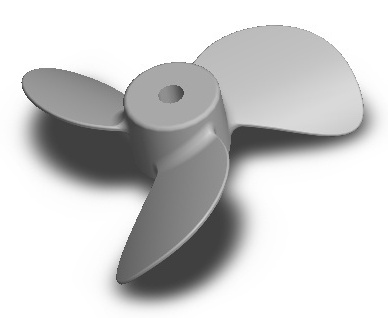
Impellers courtesy of P. Csiszar |
|
The propeller was probably the first axial flow impeller. Most propellers are designed with a near perfect pitch. Because of this, most propellers are castings. This makes them very heavy and expensive. The pitched blade turbine, PBT, took over as the next axial flow impeller, because it is made of flat stock material and is easy to build. It is much lighter, too, making it easier for mixing companies to design. Turbulent Power Numbers and Flow Numbers
The pitch of the impeller describes the distance a tip on the blade travels in the axial direction for one revolution of the impeller. A 1:1 pitch of a 1 meter diameter propeller means that point would travel 1 meter out for each revolution. A 1.5:1 pitch propeller would travel 1.5 meters for each revolution. |
|
|
A 1:1 pitch propeller is often referred to as a square pitch propeller. A 1.5:1 pitch propeller is often called a super pitch or a steep pitch propeller. They can obtain 50-70% more flow than a square pitch propeller. As you can see above, the power is 75-100% higher, too. As you can see from the two pictures to the left, propellers come in many shapes. It is difficult and almost impossible to pre-determine the Np and Nq numbers of them, because the shape of the blades have a great impact. We plan on compiling Np and Nq numbers of all propellers we can find out there soon. Bookmark this page if you are interested and come back again later. The reason we have various spellings for this impeller type is because they seem to be common. |
|
|
|