 |
|
 |
|
|
|
|
|
|
Impeller: RT |

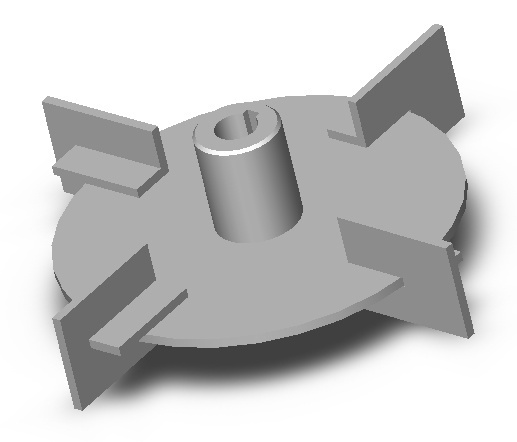 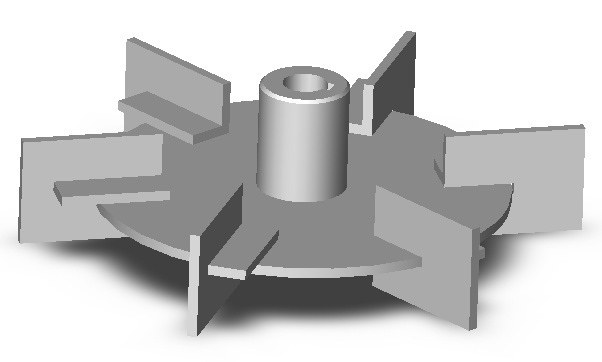
Images courtesy of P. Csiszar |
|||||||||||||||||||||||||||||||||||||||||||
|
There are probably more mixing studies done and articles written using the Rushton Turbine (we name it RT) than any other impeller. The casual mixing investigator will think that mixing is only about RTs. Well, with the huge amount of work done on the RT, there is also a wide disparity of data on the RTs. J.H. Rushton invented an impeller he called a flat bladed turbine. Everyone else knows about it as the Rushton Turbine or a flat bladed, disk turbine (or disc turbine). The Rushton Turbine is considered a generic impeller today. The data presented here is quoted from his very famous work back in 1950. Mixing theory was in its infancy back then. The 5th exponent on impeller diameter was still being questioned. Rushton studied in his report many different RT and other impeller configurations, many that aren't used any more today. |
||||||||||||||||||||||||||||||||||||||||||||
|
||||||||||||||||||||||||||||||||||||||||||||
|
For this table, the impeller off bottom distance, OB, is equal to the impeller diameter, OB/D=1.0. The liquid level is equal to the tank diameter, Z/T=1.0. The impeller diameter, D, is about 1/3 of the tank diameter, D/T=1/3. The fully baffled condition is assumed. Rushton studied the impact of the different baffle standard widths, 1/10th for the metric system and 1/12th for the American/British method. See the Baffle Section for more information on this. If you are using a 5-bladed RT in a gassed application, contact us to learn why you are probably having problems. If you are too shy to do that, you can wait and it will eventually be posted here at Post Mixing, but you may be wasting precious resources in the meantime. |
||||||||||||||||||||||||||||||||||||||||||||
|
|